
Lower back pain is a common health problem that can affect daily activities, mobility, and quality of life. One possible cause is lumbar disc herniation, a spinal condition in which the soft inner material of an intervertebral disc pushes through its outer layer and may compress nearby spinal nerves.
People with a herniated disc may experience lower back pain, sciatica, tingling, numbness, or weakness in one or both legs. While many patients improve with medication, physiotherapy, and lifestyle modifications, some may require surgical treatment.
But how do you know when surgery is necessary?
Understanding the symptoms, severity of nerve compression, diagnostic findings, and available treatment options can help patients make informed decisions.
Quick Answer
About 80% to 90% of lumbar disc herniations improve without surgery, usually within 6 to 12 weeks of non surgical care. Surgery is generally necessary only when severe nerve compression causes emergencies, progressive weakness, or pain that does not respond to conservative treatment.
What Is Lumbar Disc Herniation?
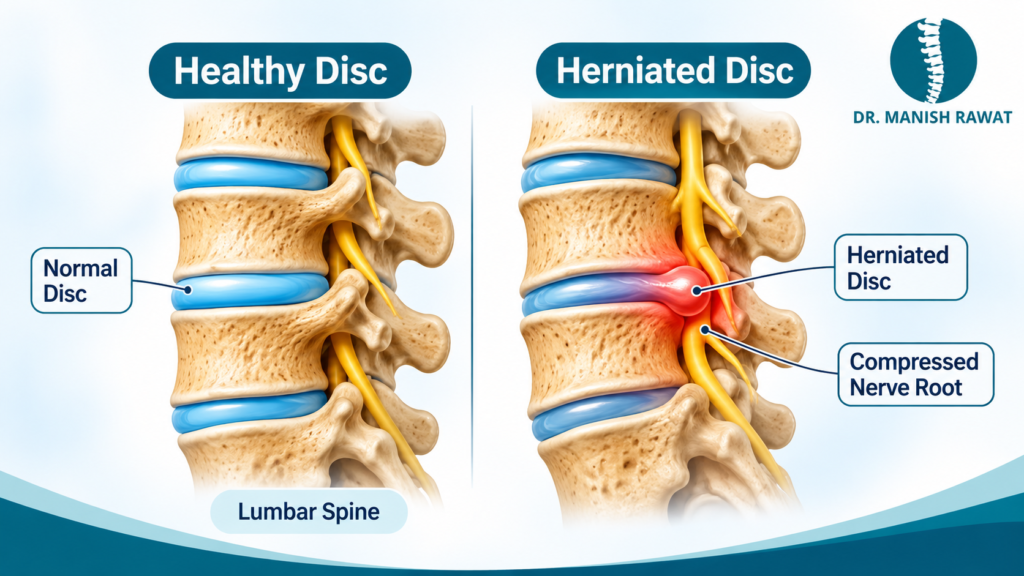
The lumbar spine consists of five vertebrae in the lower back, separated by soft intervertebral discs. These discs act as cushions, absorb shock, and allow the spine to move comfortably.
A lumbar disc herniation occurs when the inner gel like material of a disc pushes through a weakened or damaged outer layer. This material may irritate or compress nearby nerve roots.
The condition commonly develops in the lower lumbar region, particularly at the L4-L5 and L5-S1 levels.
Disc herniation can develop due to age-related disc degeneration, repetitive strain, improper lifting techniques, sudden injuries, or excessive pressure on the spine.
Not every herniated disc causes symptoms. Some people may have disc changes visible on an MRI without experiencing significant pain.
Common Symptoms of Lumbar Disc Herniation
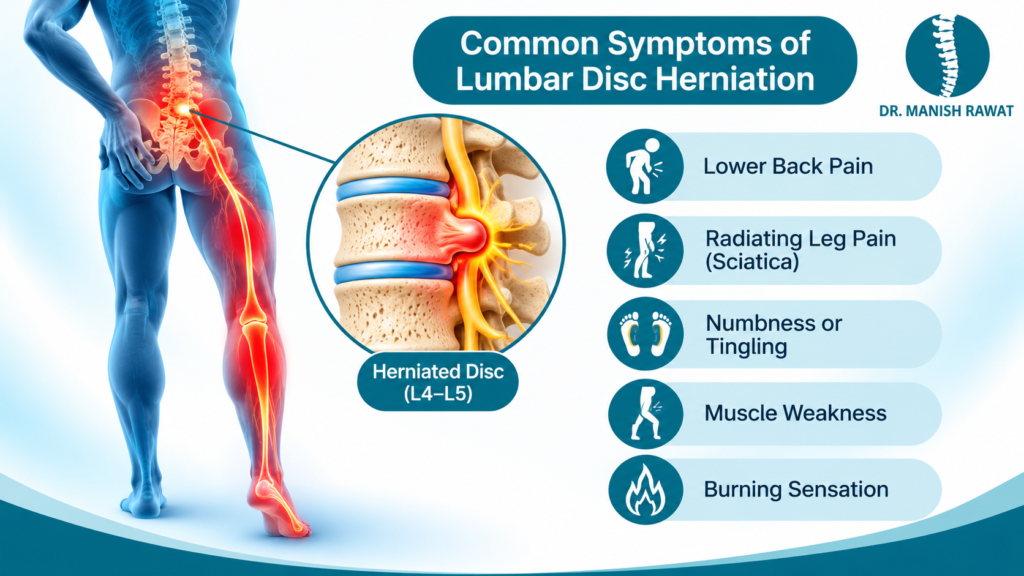
Symptoms depend on the location of the herniated disc and the degree of nerve compression.
Common warning signs include:
- Lower Back Pain: Persistent or recurring pain in the lower back that may worsen with bending, lifting, coughing, or sneezing.
- Sciatica: Pain that travels from the lower back through the buttock and down one leg.
- Tingling Sensation: Pins and needles sensations in the legs or feet.
- Numbness: Reduced sensation in specific areas of the leg or foot.
- Muscle Weakness: Difficulty lifting the foot, standing on the toes, or walking normally.
- Reduced Mobility: Difficulty sitting, standing, bending, or performing everyday activities.
When symptoms are associated with progressive weakness or significant nerve compression, medical evaluation becomes particularly important.
What Causes Lumbar Disc Herniation?
Several factors can contribute to lumbar disc herniation.
1. Age-Related Disc Degeneration
As people age, spinal discs gradually lose water content and flexibility. This makes them more vulnerable to damage and herniation.
2. Improper Lifting Techniques
Lifting heavy objects without maintaining proper posture can place excessive pressure on the lumbar spine.
3. Prolonged Sitting
Long periods of sitting, especially with poor posture, may contribute to lower back discomfort and spinal strain.
4. Sudden Injury
Falls, accidents, or sudden twisting movements can damage the outer layer of a spinal disc.
5. Excess Body Weight
Excess body weight can increase mechanical stress on the lower back.
6. Repetitive Physical Strain
Repeated bending, twisting, and heavy physical activities may contribute to disc damage over time.
When Is Surgery Necessary for Lumbar Disc Herniation?
One of the most common questions patients ask is whether a herniated disc always requires surgery.
The answer is no. Most patients with lumbar disc herniation do not require immediate surgery. Many improve with conservative treatment over several weeks.
However, surgery may become necessary when symptoms are severe, persistent, or associated with significant nerve compression.
The following situations may indicate the need for surgical evaluation.
1. Persistent Pain Despite Conservative Treatment
If severe back pain or sciatica continues despite appropriate medication, physiotherapy, activity modification, and other non surgical treatments, surgery may be considered.
A typical initial conservative treatment period is around 6–12 weeks, depending on symptom severity and neurological findings.
Patients whose pain significantly affects sleep, walking, work, or daily activities may benefit from a surgical assessment.
2. Progressive Muscle Weakness
Muscle weakness is an important warning sign of nerve compression.
Patients may experience:
- Difficulty lifting the front part of the foot.
- Difficulty walking or climbing stairs.
- Reduced strength in the legs.
- Difficulty standing on the toes.
- Foot drop or changes in walking patterns.
If weakness is progressing, early surgical evaluation is important. Waiting too long may increase the risk of permanent nerve damage.
3. Severe Nerve Compression
When a herniated disc significantly compresses a spinal nerve root, it can cause persistent pain, numbness, and weakness.
An MRI may help identify the location and severity of nerve compression.
If the clinical examination and imaging findings match the patient’s symptoms, surgery may be recommended to relieve pressure on the affected nerve.
4. Cauda Equina Syndrome
Medical emergency
Cauda equina syndrome is a serious condition in which the bundle of nerves at the lower end of the spinal cord becomes compressed.
Warning signs include:
- Difficulty passing urine or inability to urinate.
- Loss of bladder or bowel control.
- Numbness around the inner thighs, buttocks, or genital region (saddle numbness).
- Severe or progressive weakness in the legs.
These symptoms require immediate emergency medical assessment. Emergency MRI and urgent surgical decompression may be necessary to reduce the risk of permanent neurological damage.
5. Repeated Episodes Affecting Quality of Life
Some patients experience recurring episodes of severe sciatica that interfere with daily activities despite appropriate treatment.
When symptoms repeatedly return and significantly affect mobility or quality of life, a neurosurgeon may discuss surgical options after reviewing the patient’s condition.
Can Lumbar Disc Herniation Be Treated Without Surgery?
Yes. Many cases of lumbar disc herniation improve without surgery.
Conservative treatment is generally considered the first approach when there is no severe or progressive neurological deficit or emergency condition.
Common non surgical treatment options include:
1. Medications
Doctors may prescribe appropriate pain relieving or anti inflammatory medicines to help manage discomfort. Other medicines may be considered for specific nerve related symptoms.
Medication should always be taken according to medical advice.
2. Physiotherapy
Physiotherapy focuses on improving spinal mobility, strengthening supporting muscles, and reducing discomfort.
A physiotherapist may recommend:
- Gentle stretching exercises.
- Core muscle strengthening.
- Posture correction.
- Walking and controlled physical activities.
- Movement and body mechanics training.
3. Activity Modification
Patients may need to temporarily avoid activities that increase spinal pressure, such as heavy lifting, repeated bending, and sudden twisting.
However, prolonged bed rest is generally not recommended. Gentle movement, as tolerated, can support recovery.
4. Epidural Steroid Injections
In selected patients, epidural steroid injections may help reduce inflammation around irritated spinal nerves and provide temporary relief from leg pain.
These injections do not physically remove the herniated disc.
Surgical Treatment Options for Lumbar Disc Herniation
When conservative treatment does not provide sufficient relief or neurological symptoms require intervention, surgery may be recommended.
The choice of procedure depends on the location of the herniation, nerve compression, spinal stability, and overall patient condition.
1. Microdiscectomy
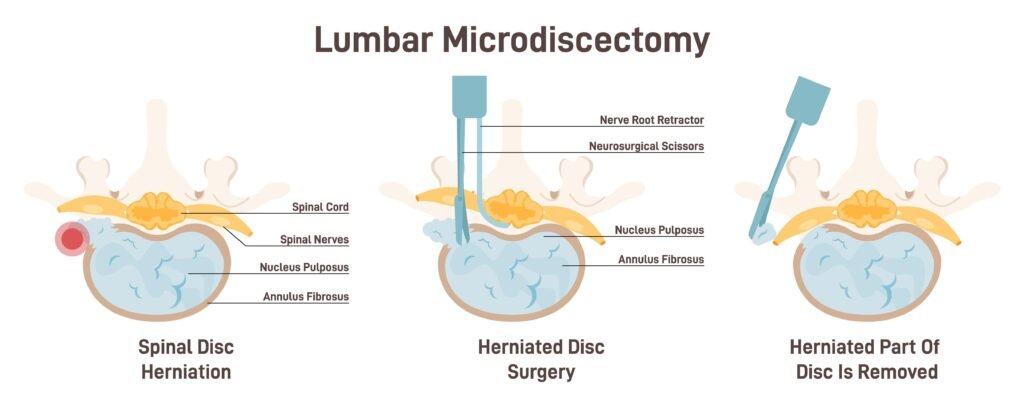
Microdiscectomy is a commonly performed surgical procedure for lumbar disc herniation.
During this procedure, the surgeon uses magnification and specialised instruments to remove the portion of the disc pressing against the affected nerve.
Potential benefits include:
- Relief from nerve compression.
- Reduction in radiating leg pain.
- Smaller surgical incision compared with traditional open surgery.
- Preservation of most of the healthy disc structure.
- Faster recovery in appropriately selected patients.
2. Endoscopic Spine Surgery
Endoscopic spine surgery is a minimally invasive technique that uses a small camera and specialised instruments to access and remove the herniated disc material.
Depending on the patient’s condition, it may offer:
- Smaller incisions.
- Less disruption to surrounding muscles.
- Reduced blood loss.
- Less postoperative discomfort in selected cases.
- Potentially quicker recovery.
Not every patient is suitable for endoscopic surgery. The appropriate technique depends on the anatomy and type of disc herniation.
3. Open Discectomy
Open discectomy involves a larger surgical exposure to access the affected disc and remove the herniated material.
It may be considered in selected cases where the anatomy, complexity of compression, or other clinical factors make a conventional approach more appropriate.
4. Spinal Fusion
Spinal fusion is not routinely required for a simple lumbar disc herniation.
It may be considered in selected patients with additional problems such as spinal instability, significant associated degenerative changes, or recurrent disc herniation in specific circumstances.
The decision requires careful evaluation.
What Happens Before Lumbar Disc Surgery?
Before recommending surgery, a neurosurgeon evaluates the patient’s symptoms, physical condition, neurological findings, and imaging reports.
The assessment may include:
1. Medical History: Understanding the duration of pain, previous treatments, and changes in symptoms.
2. Neurological Examination: Checking muscle strength, reflexes, sensation, and walking ability.
3. MRI Scan: Identifying the location of the herniated disc and assessing nerve compression.
4. Additional Investigations: X-rays or other tests may be recommended when needed to evaluate spinal alignment, stability, or alternative causes of symptoms.
Surgery is generally considered when the clinical findings and imaging results support the same diagnosis.
Recovery After Lumbar Disc Herniation Surgery
Recovery depends on the type of surgery, the severity of nerve compression, and the patient’s overall health.
After a minimally invasive discectomy, many patients can start walking within hours or the first day, depending on their condition and the surgeon’s advice.
The recovery process may include:
- Gradually increasing walking and daily activities.
- Following wound care instructions.
- Avoiding heavy lifting during the recommended recovery period.
- Following prescribed physiotherapy when appropriate.
- Maintaining proper posture and body mechanics.
- Attending scheduled follow up appointments.
Leg pain caused by nerve compression may improve relatively quickly after successful decompression. However, numbness, weakness, or other neurological symptoms may take longer to recover, and complete recovery is not guaranteed.
How Can You Prevent Lumbar Disc Problems?
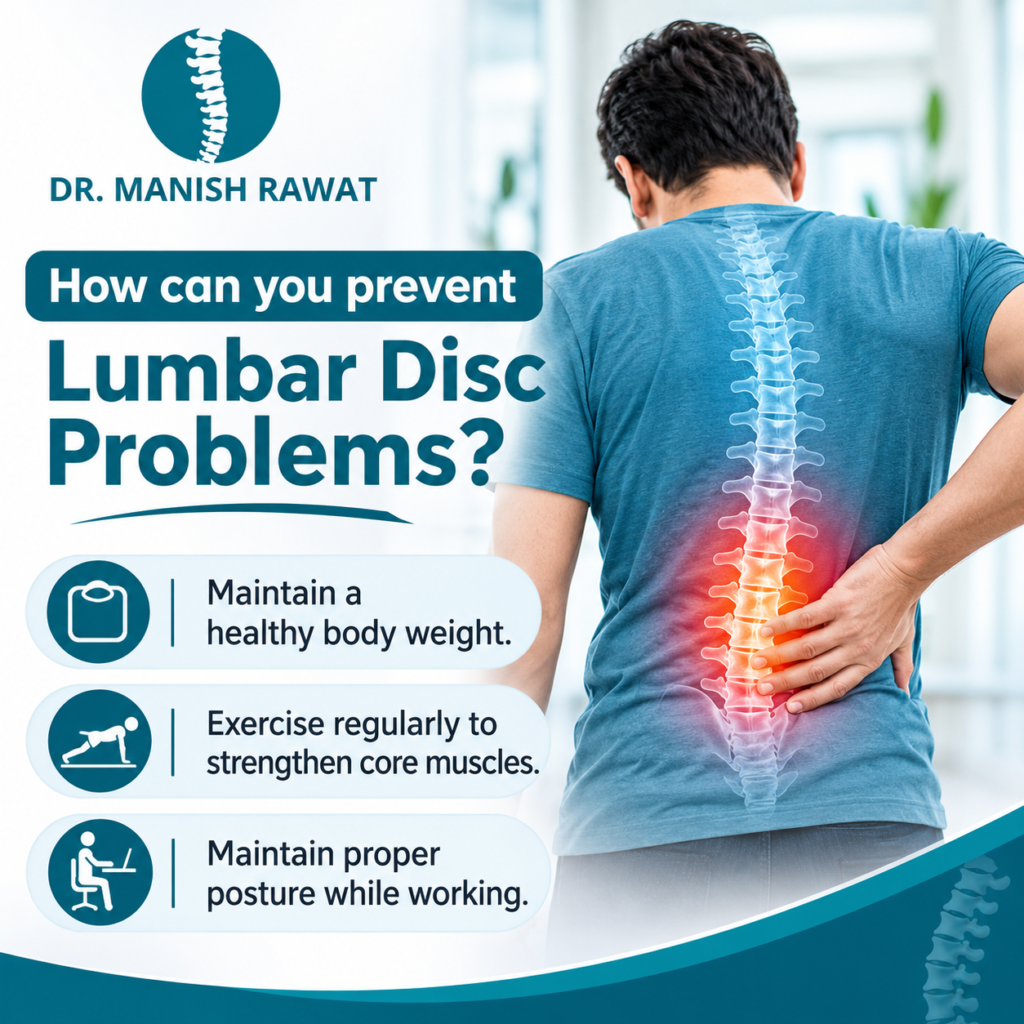
Although disc degeneration cannot always be prevented, certain lifestyle habits may help reduce unnecessary stress on the spine.
- Maintain a healthy body weight.
- Exercise regularly to strengthen core and back muscles.
- Avoid lifting heavy objects incorrectly.
- Take regular breaks from prolonged sitting.
- Maintain proper posture while working.
- Avoid sudden twisting movements while carrying heavy loads.
- Stop smoking, as smoking is associated with poorer disc health.
These measures can support spinal health and reduce the risk of recurring back problems.
When Should You Consult a Neurosurgeon?
You should consider consulting a neurosurgeon if you experience:
- Persistent lower back pain with leg pain.
- Numbness or tingling in the legs or feet.
- Difficulty walking due to pain or weakness.
- Progressive muscle weakness.
- Recurrent sciatica that affects daily activities.
- Symptoms that do not improve with appropriate treatment.
If you experience new bladder or bowel dysfunction, saddle numbness, or rapidly progressing leg weakness, seek emergency medical attention rather than waiting for a routine appointment.
Early diagnosis and appropriate treatment can help prevent complications and improve the chances of recovery.
Conclusion
Lumbar disc herniation does not always require surgery. Many patients recover with medications, physiotherapy, activity modification, and other conservative treatments.
However, surgery may become necessary when pain persists despite appropriate treatment, muscle weakness progresses, or significant nerve compression affects neurological function. Conditions such as cauda equina syndrome require emergency assessment and may need urgent surgical intervention.
Modern procedures such as microdiscectomy and endoscopic spine surgery offer effective treatment options for appropriately selected patients.
The most important step is to identify the underlying cause of symptoms and choose treatment based on individual clinical findings.
Dr. Manish Rawat, Neurosurgeon, emphasises the importance of timely diagnosis, careful evaluation, and an individualised treatment approach for patients experiencing spinal disorders.
Frequently Asked Questions
1. Does every lumbar disc herniation require surgery?
No. Most lumbar disc herniations can initially be managed with non surgical treatments such as medication, physiotherapy, and activity modification.
2. How long should I wait before considering surgery for a slipped disc?
Many patients are initially treated conservatively for around 6–12 weeks. However, progressive muscle weakness or emergency symptoms may require earlier intervention.
3. Can a herniated lumbar disc heal naturally?
Yes. Symptoms can improve over time, and the body can gradually reduce or reabsorb some herniated disc material. However, recovery varies between individuals.
4. Is endoscopic spine surgery better than open surgery?
Endoscopic surgery may offer smaller incisions and less muscle disruption in suitable patients. However, the best surgical technique depends on the type and location of the disc herniation.
5. Can lumbar disc herniation cause permanent nerve damage?
Severe or prolonged nerve compression can sometimes cause lasting weakness, numbness, or other neurological problems. Early evaluation is important when neurological symptoms develop or progress.

Doctor Manish Rawat, the best neurosurgeon in Gurugram, is a highly accomplished Senior Neurosurgeon with over 25 years of medical experience, including 18 years dedicated to neurosurgery.